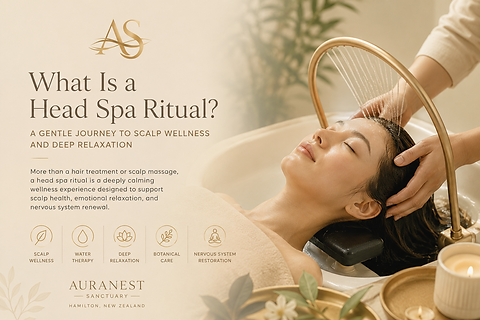

A tight scalp is usually muscle tension, not a problem with the skin. Stress, hours of screen time, jaw clenching and shallow breathing tighten the small muscles over your skull, restrict circulation and create that band of pressure across the top of your head. The good news is that scalp tension responds well to slow, gentle pressure, warmth and rest. Here's what causes it and how to release it.
Where scalp tension actually comes from
The scalp sits over a network of small muscles, and like any muscle in the body, they can hold stress. When we're anxious, overworked, or simply not sleeping well, those muscles tighten, restrict circulation, and create a dull pressure that can radiate from the crown down into the neck and temples.
Screen time is a significant contributor. Hours looking at a phone or laptop pull the head forward and tighten the muscles at the back of the skull, a spot that most people don't touch until it's already sore. Grinding your teeth at night, clenching your jaw during the day, and shallow breathing when you're stressed all feed into the same pattern. So does dehydration, which affects the fascia around the scalp and leaves everything feeling less supple than it should.
Scalp buildup can add to the problem too. When oil, product residue, or dead skin block the follicle, the scalp can feel sensitive and reactive, which compounds any underlying tension rather than sitting separately from it.
The scalp tension headache — why it's different
A scalp tension headache doesn't usually arrive with the sharp, throbbing quality of a migraine. It tends to feel more like a band of pressure, a tightness across the forehead or over the crown, or a weight sitting at the base of the skull. It often worsens through the afternoon, after long periods of concentration, or at the end of a week that's asked a lot of you.
The reason it responds so well to scalp work is that the source is largely muscular and circulatory. Releasing the tissue directly, with slow, considered pressure along the right pathways, can ease that feeling in a way that painkillers don't quite touch, because it addresses the cause rather than masking the sensation.
What you can do at home
Some of the most effective at-home relief is also the simplest. Use your fingertips, not your nails, to make slow circular movements across your scalp. Start at the base of the skull, where tension often anchors itself, and work forward toward the crown. Take your time. This isn't a quick scratch — the point is to coax the muscle into releasing, which takes a little patience.
Warmth helps. A warm shower or a warm towel held at the back of the neck before you start lets the tissue soften before you apply pressure. Drinking more water through the day matters more than most people expect. And if your jaw tends to clench, placing your tongue gently on the roof of your mouth is a small cue that can break the habit in the moment.
Stepping away from the screen at regular intervals, even briefly, gives the muscles at the back of your head a chance to reset. Even ten minutes lying flat with your eyes closed, no phone, no podcast, just stillness, can take the edge off a build-up that's been accumulating since morning.
Where professional treatment makes the real difference
Home care keeps things manageable between visits. What it can't offer is the depth and precision of work done by someone who can see and feel exactly where the tension is held, and who isn't themselves carrying tension in their hands while they work.
At Auranest, our Aura Tension Relief treatment is designed specifically for this. Slow, focused meridian-inspired pressure follows the pathways across the scalp, neck, and shoulders, finding the places where tension has settled in and encouraging the tissue to let go. It's quiet, unhurried work, and the difference between before and after tends to be felt in the whole body, not just the head.
Our Purifying Root Ritual is worth considering alongside it if buildup is part of the picture, because a clear, clean scalp responds to treatment more readily than one that's congested.
You don't need to arrive in crisis. A week that's felt relentless, shoulders that won't drop, a head that's been carrying more than usual — all of that is reason enough.
Release it properly
Scalp tension, and the headaches that come with it, rarely resolve on their own. They tend to accumulate, layer by layer, until something interrupts the pattern. Slow, deliberate care, whether at home or in a treatment room, is what interrupts it.
What causes a tight scalp?
Most often it's muscle tension from stress, long periods looking at a screen, clenching your jaw or grinding your teeth, shallow breathing and dehydration. Buildup on the scalp can add sensitivity on top of that.
How do you release scalp tension at home?
Use your fingertips to make slow circles from the base of the skull toward the crown, ideally after warmth from a shower or a warm towel on the neck. Drink water, take short breaks from screens, and rest your eyes for a few minutes.
When should you see a GP about scalp tension or headaches?
See your GP if headaches are frequent, severe or sudden, if they come with vision changes, numbness or fever, or if they don't ease with rest and gentle care. Scalp massage can ease muscular tension, but it isn't a substitute for medical advice.
Book your ritual at Auranest Sanctuary in Chartwell, Hamilton. An hour of warmth, stillness, and careful attention — for a head that's been working too hard for too long.